Showing posts with label Daphne du Maurier. Show all posts
Thursday, July 5, 2012 | By: GirlsWannaRead

Book to Box Office


     With two film versions of classic novels due to premiere later this year - Tolstoy's Anna Karenina and Fitzgerald's The Great Gatsby - my thoughts have turned to other books that have been adapted for the "big screen."  I always await them with apprehension and harbor a secret fear that they will disappoint me.  Some have been beautifully faithful to the text, others haven't, and sometimes (I hate to admit it) it doesn't matter.
     Here's a list of best, worst, etc. from the past:

  • A Movie That Was a Perfect Adaptation of a NovelRebecca - with Joan Fontaine, Laurence Olivier, and Judith Anderson as Mrs. Danvers 
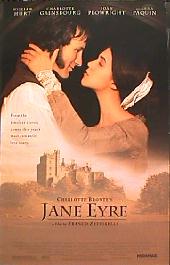
  • A Favorite Movie Version of a Book That Has Been Done Multiple TimesJane Eyre - with William Hurt as Rochester and Charlotte Gainsbourg as Jane  
  • Two Movie Versions That Are Equally Great in Their Own WayThe Innocents (a version of the Turn of the Screw) starring Deborah Kerr and The Turn of the Screw starring Jodhi May 

    Monday, July 2, 2012 | By: GirlsWannaRead

    Frenchman's Creek - Daphne du Maurier


         There are some books that I return to again and again.  Frenchman's Creek is one of the books I re-read often.  Recently, it began to call to me once more and for the umpteenth time I was happily lost in its magic.
         First, it is wonderfully written as are all of du Maurier's novels.  She begins by drawing the reader into the atmosphere of the Cornish coast with vivid description and beautiful prose:

    When the east wind blows up Helford River the shining waters become troubled and disturbed and the little waves beat angrily upon the sandy shores.  The short seas break above the bar at ebb-tide, and the waders fly inland to the mud-flats, their wings skimming the surface, and calling to one another as they go.  Only the gulls remain, wheeling and crying above the foam, diving now and again in search of food, their grey feathers glistening with the salt spray.

    It has a rich cinematic quality to it (in fact, it has been adapted for the screen twice) and the sea and the countryside are "characters" in the novel as much as Dona and her Frenchman.
         A few months short of her thirtieth birthday, Lady Dona St. Columb is bored with her bumbling husband, stifled by the restrictions of seventeenth century London, and exasperated with the frivolity of her life.  She takes her two children and flees to Navron, the house where her husband grew up, in order to find peace.  But when she arrives, she finds the house inhabited by a lone servant, William, and the coast plagued by a marauding crew of pirates.  William quickly and accurately appraises Dona and tells her she is "a fugitive from your London self and Navron is your sanctuary."  A deep understanding and friendship develops between them with William supporting and assisting her in her escape from her former life.  But William, a memorable and loveable character, turns out to be in league with the pirates.
         Dona stumbles upon the pirate ship, La Mouette, anchored in the creek on Navron land and is brought aboard.  The Frenchman, Jean Benoit Aubery, is not what she expects.  He is much more of a gentleman than a savage and spends his time drawing birds and reading poetry.  As he explains:

    There are no dark problems about it. I have no grudge against society, no bitter hatred of my fellow-men. It just happens that the problems of piracy interest me, suit my particular bent of thought.

    She finds in him a kindred spirit and a fellow escapee from the restraints of conventional society.  He sees her as more than just the Lady St. Columb and, unlike her husband, understands her.  Of course, she falls in love with him. But this is not a bodice-ripping pirate romance novel.  Written in 1941, the physical side of their love in mostly hinted at and their relationship is revealed mainly in the witty, clever, sexy dialog they banter back and forth.
         Disguised as a cabin-boy, Dona joins the Frenchman in one of his escapes and finds herself involved in piracy against her neighbors.  She sails away with Jean Benoit and his crew for a wonderfully liberating week and returns to find that her husband has come to Navron to help capture the pirate.  Her collaboration with the pirate is soon disrupted when he is caught and she must scheme to free him.
         Frenchman's Creek is above all a story of self-discovery.  Dona must learn the distinction between happiness and contentment.  The Frenchman is aware of the difference and explains it to Dona.  Happiness, he says, is "elusive, coming maybe once in a lifetime", and not a continuous thing. Happiness has degrees, however, and for a man "happiness tends to come from things achieved". Contentment, on the other hand, is "a state of mind and body when the two work in harmony, and there is no friction. The mind is at peace and the body is also."
         The difficulty for Dona, as William explains to her, is that the Frenchman's ship is his castle; that he comes and goes as he pleases, and dislikes a lifestyle that leads to habits and customs - fearful that it will kill all spontaneity; "he is without ties, without man-mad principles;" he is truly free. Dona, who initially wishes for the very same thing becomes aware that the options for a woman are very different than those for a man.  The Frenchman feels the strong pull of the sea but Dona, as a mother, feels the pull of her children just as strongly.  After experiencing true happiness, she must make a difficult choice.
         But, above all,  Frenchman's Creek is about the desire to escape and the perfect novel to lose yourself in when you want to get away from it all.  Pirates...Frenchmen...Swashbuckling...Breathtaking Romance - curl up and lose yourself on the Cornish coast!
    Friday, July 29, 2011 | By: GirlsWannaRead

    Enchanted Cornwall: Her Pictoral Memoir by Daphne du Maurier


         If you've followed our blog, you may have gathered that I'm a huge fan of Daphne du Maurier - especially her novel Rebecca.  This book is a wonderful visual journey through the Cornish landscape that she so vividly paints in her novel.  But more than that, it is a chronicle of the part Cornwall has played in her life.  She says:

         I walked this land with a dreamer's freedom and with a waking man's perspective - places, houses whispered to me their secrets and shared with me their sorrows and their joys.  And in return I gave them something of myself, a few of my novels passing into the folk-lore of this ancient place.


         Written in her later years, the book looks back on her life from her childhood, to her early love of Cornwall, and the stories behind the novels she set there.  She uses passages from her many novels along with beautiful photographs of the areas that inspired each one.
         I enjoyed the stories of her childhood.  As the daughter of a British actor, she was raised on the world of make-believe and surrounded by her father's famous colleagues and friends.  She notes that after a visit from Basil Rathbone, there is a page in her diary on which she drew a heart pierced by an arrow and the words, "I love Basil."  Years later, he played the part of the wicked Lord Rockingham in the film version of her novel Frenchman's Creek.


       My favorite section of the book is when she writes about Menabilly, the house that inspired Rebecca.  The house was abandoned, the owner living elsewhere, and from the moment she set eyes upon it she was under its spell.  She began to write Rebecca in 1937 while her husband was stationed in Alexandria and she was homesick for Cornwall.

         This novel would not be a tale of smugglers and wreckers of the nineteenth century, like Jamaica Inn, but would be set in the present day, say the mid-twenties, and it would be about a young wife and her slightly older husband, living in a beautiful house that had been in his family for generations.  There were many such houses in Cornwall; my friend Foy Quiller-Couch, with whom I visited Jamaica Inn, had taken me to some of them.  Houses with extensive grounds, with woods, near to the sea, with family portraits on the walls...my Cornish house would be empty, neglected, its owners absent...very like Menabilly near Fowey...where I had so often trespassed.  And surely the Quiller-Couches had once told me that the owner had been married first to a very beautiful wife, whom he had divorced, and had married again a much younger woman?
         I wondered if she had been jealous of the first wife, as I would have been jealous if my Tommy had been married before he married me...
        Seeds began to drop.  A beautiful home...a first wife...jealousy...a wreck, perhaps at sea, near to the house...But something terrible would have to happen, I did not know what...
         The couple would be living abroad, after some tragedy, there would be an epilogue - but on second thoughts that would have to come at the beginning...
         And thoughts turned to my first encounter with Menabilly, as I made my way down the old driveway from the east lodge, as it were in a dream.

         Thus, Rebecca was born.  Years later, after Rebecca was published, she actually leased Menabilly and lived there.


         Two of her other novels were set largely at Menabilly, The King's General and My Cousin Rachel.


         For fans of du Maurier, this memoir provides insight into the writer and the world of her novels.

         ~ Frances
    Sunday, July 17, 2011 | By: GirlsWannaRead

    The Turn of the Screw - Henry James


         Inspired by Allie's post on Daisy Miller and Audrey's post on The American, I decided it was high time to re-read Henry James's The Turn of the Screw. I am certainly no stranger to this novella, having read it and re-read it countless times over the last few years. In my opinion, the strongest aspect of this novella is its opening, which oddly enough never manages to make it into its film adaptations. James structured The Turn of the Screw as a frame story with the main story of the governess being introduced by another narrator. We are first introduced to Douglas who promises his rapt audience a sorely needed mystery to engage their imaginations. Douglas reads from a journal containing the horrific story of his old governess's experiences at a quiet country house called Bly.
         Like the new Mrs. de Winter in Daphne du Maurier's Rebecca, James's protagonist is given no name. The governess, as she is called throughout the novella, accepts a position caring for the nephew and niece of a thoroughly charming bachelor whom she, of course, finds attractive. The children, Miles and Flora, are absolute cherubs, and their governess initially finds no fault with them. The children and Bly transform in the governess's eyes, however, when she sees a mysterious man on one of the towers. He is not a servant in the house or a man from the village. The housekeeper, Mrs. Grose, identifies him by the governess's description as former valet Peter Quint. To the governess's horror, Quint is dead. In attempting to rationalize this, she believes that she has seen Quint's ghost. Her visions of Quint are then joined by the ghost of her dead predecessor, Miss Jessel.
         The governess believes that these ghosts have returned to take control of little Miles and Flora. Under the influence of these ghosts, she sees her charges growing more distant from her daily. She decides that the only way to rid Bly and the children of the ghosts of Quint and Jessel is to confront the children and force them to admit the ghosts are present and renounce their power over them.


         The Turn of the Screw has had numerous film adaptations. My two personal favorites are the 1961 Jack Clayton film The Innocents and the 1999 The Turn of the Screw. Clayton's version is more liberal in its adaptation but perhaps captures the thrills of the novella even better. Truman Capote even worked on the screenplay. The 1999 version adaption is almost word-for-word, but how can that be bad when the book is so good? Deborah Kerr's performance captures the hysterical side of the governess very well. Jodhi May's governess evokes much more of the psychological horror of the novella. Of the two, I prefer Jodhi May's performance as it allows for the interpretation that the governess is initially relatively sane and then descends into madness. This heightens the horror of James's story. If the governess isn't mad, then she may truly be seeing ghosts bent on possessing children.

    - Rose
    Thursday, June 30, 2011 | By: GirlsWannaRead

    Rebecca - Daphne du Maurier

         I recently re-read Daphne du Maurier's Rebecca for the Cornwall Challenge I have taken on for 2011.  The novel is one of my all time favorites as you will know if you've viewed our post "If I am caught with amnesia".  I read the novel first as an adolescent and can't begin to count the number of times I've read it since.  "Last night I dreamt I went to Manderley again", the famous first line draws me in over and over again.
         First published in 1938, the story of the unnamed second wife and her husband, Maxim de Winter, whose lives are over-shadowed by the very much dead first Mrs. de Winter, Rebecca, and the evil housekeeper, Mrs. Danvers, has captivated readers for over seventy years.  Part Gothic suspense, part murder mystery, the novel is an engaging page turner.  For those, if any, who haven't read it, Wikipedia has an excellent plot summary.  This is not intended to be a review but more of an homage to this lasting work.
         The novel has inspired many other books, including Mrs. de Winter by Susan Hill and Rebecca's Tale by Sally Beauman.
         Here's a bit of info I found on Rebecca:  "One edition of the book was used as a code source.  Sentences would be made using single words in the book, referred to by page number, line and position in the line.  One copy was kept at Rommel's headquarters and the other was carried by German Abwehr agents infiltrated in Cairo after crossing Egypt by car...The code was never used, however, because the radio section of the HQ was captured in a skirmish and hence the Germans suspected that the code was compromised."  Wow!  How many novels can claim that!
         Inevitably, the novel has been adapted for film.  The first instance was Alfred Hitchcock's version starring Laurence Olivier and Joan Fontaine.  It has also been adapted for television and stage.
         Few novels have inspired music but, of course, this one has.  Here's a clip (with lyrics) of Meg and Dia (Dia Frampton who was the runner-up on The Voice recently) singing "Rebecca", inspired by the du Maurier novel.  Enjoy!


    - Frances
    Monday, June 13, 2011 | By: GirlsWannaRead

    Hook, Line, and Sinker! (Great First Lines)

         I'm currently re-reading Rebecca by Daphne du Maurier (for my Cornwall challenge) and reading for the first time The Go-Between by L. P. Hartley. These two books have two of the most memorable first lines in literature:

    "Last night I dreamt I went to Manderley again." ~ Rebecca

    "The past is a foreign country; they do things differently there." ~ The Go-Between

         Isn't it odd how some first lines stay with you forever? First lines really do play an important part in any novel or short story. When well crafted, they pull you into the fictional world immediately. They are certainly not the deciding factor in whether or not I will finish a novel, but a glance at the first line of a book is often what triggers a purchase or a library check-out. Here are a few other personal favorites (feel free to share yours!):

    "Call me Ishmael." ~ Moby Dick by Herman Melville

    "It is a truth universally acknowledged, that a single man in possession of a good fortune, must be in want of a wife." ~ Pride and Prejudice by Jane Austen


    "I had the story, bit by bit, from various people, and, as generally happens in such cases, each time it was a different story." ~ Ethan Frome by Edith Wharton

    "I write this sitting in the kitchen sink." ~ I Capture the Castle by Dodie Smith

    "The story had held us, round the fire, sufficiently breathless, but except the obvious remark that it was gruesome, as, on Christmas Eve in an old house, a strange tale should essentially be, I remember no comment uttered till somebody happened to say that it was the only case he had met in which such a visitation had fallen on a child." ~ The Turn of the Screw by Henry James

    "On the day they were going to kill him, Santiago Nasar got up at five-thirty in the morning to wait for the boat the bishop was coming on." ~ Chronicle of a Death Foretold by Gabriel Garcia Marquez

    "All children, except one, grow up." ~ Peter Pan by J. M. Barrie

    "Ten days after the war ended, my sister Laura drove a car off a bridge." ~ The Blind Assassin by Margaret Atwood

    "The snow in the mountains was melting and Bunny had been dead for several weeks before we came to understand the gravity of our situation." ~ The Secret History by Donna Tartt

         First lines also provide great fodder for book trivia. In the Neil Simon film Max Dugan Returns, Brian (Donald Sutherland) quizzes Nora (Marsha Mason), an English teacher, to see if she can name the novel from the first line. She guesses James Joyce's Ulysses before he finishes the line, "Stately, plump Buck Mulligan came from the stairhead, bearing a bowl of lather on which a mirror and a razor lay crossed."


    - Frances